
Car Insurance by Vehicle Type in the UK

Car Insurance by Vehicle Type in the UK
The type of vehicle you drive directly affects how car insurance is worked out. It is not just about the badge on the front.
Two drivers with similar backgrounds can end up with very different premiums simply because their cars present different risks. A small hatchback used locally is not seen in the same way as a high-performance coupe or a large four-wheel-drive vehicle covering long distances.
Small cars and city driving
Smaller cars are often placed in lower insurance groups. They tend to be cheaper to repair, simpler to maintain and are usually driven at lower speeds. That combination often keeps premiums more manageable.
For a broader view of how pricing works, see what affects car insurance and how postcode affects premiums.
city cars and compact models are commonly used for short trips, errands and commuting. Even so, heavy urban driving can increase the likelihood of minor bumps and scrapes. It is not always as straightforward as “small equals cheap”. Location and mileage still carry weight.
For a broader view of how pricing works, see what affects car insurance and how postcode affects premiums.
Family cars and larger vehicles
Family cars, estates and larger saloons sit somewhere in the middle. They are often used for regular routines such as commuting, school runs and longer steady journeys. That predictable use can help balance out higher repair costs compared to smaller cars.
Larger vehicles carry more passengers and luggage, which can increase value and potential claim costs. Still, they are not automatically expensive to insure. A carefully driven family car used in a routine pattern may be assessed more favourably than a smaller car used intensively.
- Regular, predictable journeys tend to be easier to assess
- Higher mileage can increase exposure
- Where the car is kept overnight still matters
SUVs, 4x4s and off-road vehicles
SUVs and four-wheel-drive vehicles are chosen for space and versatility. They are usually heavier and more expensive than smaller cars, which can push up repair costs if something goes wrong.
Others are taken onto rough ground or used in more demanding conditions. That difference matters. Occasional muddy lanes are one thing. Regular off-road use is another, and insurers tend to look more closely at how the vehicle is used. Some are used purely on normal roads.
Security can also come into the picture. Certain larger vehicles are more attractive to thieves, particularly where keyless systems are involved.
Sports cars, hot hatches and performance models
Performance vehicles are treated differently. More power, quicker acceleration and higher potential speeds increase the possible cost of a claim. Repairs can also be more expensive, especially where specialist parts or labour are needed.
This group ranges from lively hot hatches to high-end sports cars and supercars. A compact performance hatch is not the same as a high-value two-seat sports car, but both are viewed differently from standard vehicles.
Even within this category, there is a wide spread. Lightweight specialist cars are assessed differently from high-value grand tourers. The finer details matter, engine size, value, and how the car is used all feed into the decision.
Prestige and luxury vehicles
Prestige vehicles tend to come with higher values and more complex repair requirements. Parts can be expensive and sometimes harder to source. Repairs may require specialist workshops rather than standard garages.
Usage makes a difference here. Some prestige cars are driven occasionally and kept securely, which may balance the higher value. Others are used daily, which increases exposure to everyday risks.
Where the vehicle is stored, how often it is used and the overall mileage all play a part in how it is assessed.
Electric, hybrid and eco vehicles
Electric and hybrid cars are now part of everyday driving across the UK. They introduce a slightly different set of considerations, particularly around battery systems and specialist repair work.
Hybrid vehicles combine traditional engines with electric systems, while fully electric cars rely entirely on battery power. Repairs involving high-voltage components may need specialist handling, which can influence costs.
For more detail, see mileage and car insurance.
Charging habits, mileage and general use still matter. A lightly used electric car kept at home overnight is assessed differently from one covering long daily distances.
For more detail, see mileage and car insurance.
Older cars and everyday use
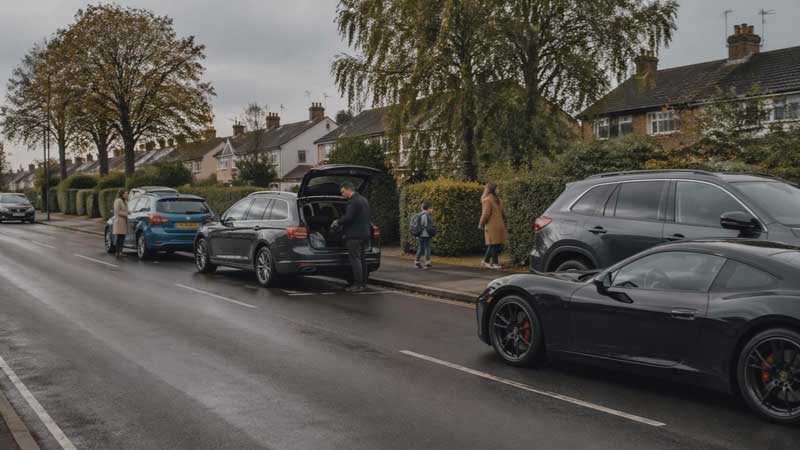
While their market value may be lower, parts can be harder to find and repairs can take longer. That can increase the cost of a claim in certain situations. Older cars are not always cheaper to insure.
Condition matters. A well-maintained older car used occasionally may be viewed differently from one used daily in heavier traffic. Age alone does not tell the full story.
Convertibles and occasional driving
Convertibles bring their own mix of factors. Roof design, security and how the car is used through the year can all influence how it is assessed.
Others are used year-round. As ever, it comes back to how the vehicle is actually used rather than what it looks like on paper. Some are driven mainly in fair weather and cover lower annual mileage.
Child car seats and cover after an accident
Vehicle type is only part of the picture. Items carried in the car can also matter. Child car seats, for example, are often recommended to be replaced after an accident, even if there is no visible damage.
For a general overview, see how car insurance works.
Some policies include cover for replacing child seats following an accident, while others do not. It is worth checking the wording rather than assuming they are automatically covered.
For a general overview, see how car insurance works.
How it all fits together
Vehicle type is only one part of how insurance is calculated. Insurers also look at the driver, the location, how far the car travels and how it is used day to day.
- Performance affects potential claim severity
- Vehicle value influences repair or replacement cost
- Usage patterns affect exposure to risk
- Security and storage can influence theft risk
Small cars, hatchbacks and family cars
Compact cars, city cars, hatchbacks and ordinary family cars are often relatively straightforward to insure, but the exact engine, trim and performance still matter. A hot hatch can cost far more than a basic version of the same model.
SUVs, 4x4s, convertibles and sports cars
Larger SUVs, convertibles, prestige cars and sports cars can attract higher premiums where their value, performance, repair cost or theft risk is greater. The body style itself is only part of the calculation.
Older cars, automatic cars and financed vehicles
An older car is not automatically cheaper to insure because liability claims can still be expensive. Automatic transmission does not by itself decide the premium either. Cars on finance need suitable insurance just like cars bought outright, and the finance agreement may impose additional requirements.
Company and commercial vehicles
A company car can sometimes be insured under an employer's arrangements, while vans and commercial vehicles may need a different policy from an ordinary private car. The correct policy depends on ownership and use rather than simply the vehicle's size.
The car matters, but it never stands alone. Matching the vehicle to the right type of cover, and describing how it is used accurately, helps avoid complications if something unexpected happens.