
Cheap Car Insurance by Driver Type in the UK

Cheap Car Insurance by Driver Type in the UK
This page brings those factors together in one place so you can see how insurers tend to assess risk, and why certain drivers are charged more or less.
Each of these factors is considered as part of a wider picture. Insurers do not rely on a single detail. Instead, they combine information about the driver, the vehicle, and how it is used to arrive at a price.
Age groups
Younger drivers, particularly those under 25, are statistically more likely to be involved in accidents. That usually means higher premiums, especially in the first few years of driving. Age is one of the first things insurers consider.
As experience builds, pricing often becomes more stable. Drivers in middle age tend to benefit from lower premiums if they have a clean record and steady usage patterns.
For a closer look at how age affects pricing, see insurance for younger and less experienced drivers.
Later in life, pricing may shift again. Insurers sometimes look more closely at medical conditions, reaction times, and driving frequency.
For a closer look at how age affects pricing, see insurance for younger and less experienced drivers.
Professions
Your job title can influence your insurance more than many people expect. It is not about status, but about how the role is interpreted in terms of risk.
For example, someone who travels frequently for work or drives at busy times may be seen as higher risk than someone with a regular commute and predictable hours.
Even similar roles can be assessed differently depending on how they are described when applying.
Different roles are assessed in different ways. See car insurance by occupation for more detail.
Driving history and risk factors
Past driving history plays a major part in pricing. Previous claims, points on a licence, or driving convictions can all increase premiums.
Insurers use this information to estimate how likely a future claim may be. The more recent or serious the issue, the more weight it usually carries.
Over time, older incidents tend to have less impact, particularly if your record remains clean.
If you have previous claims or points, you may want to read car insurance for higher-risk drivers.
Lifestyle and personal circumstances
How you use your car day to day matters. Someone who drives occasionally for short trips is usually seen differently from someone covering long distances every week.
Where the car is kept overnight also plays a part. Parking on a driveway or in a garage may reduce perceived risk compared to leaving a car on a busy street.
For situations such as shared cars or different living arrangements, see car insurance by lifestyle and circumstances.
Household arrangements can also influence pricing. Cars shared between multiple drivers, or used for different purposes, may need more careful assessment.
For situations such as shared cars or different living arrangements, see car insurance by lifestyle and circumstances.
Vehicle type
The car itself is a major factor. Engine size, value, repair costs, and theft rates all feed into how insurers price a policy.
Smaller, lower-powered cars are often cheaper to insure, although the price depends on the particular model’s insurance group, repair cost, security and claims record.
Vehicle choice can make a noticeable difference. See insurance by vehicle type.
higher-value or modified vehicles tend to increase premiums, as do cars with expensive parts or specialist repair requirements.
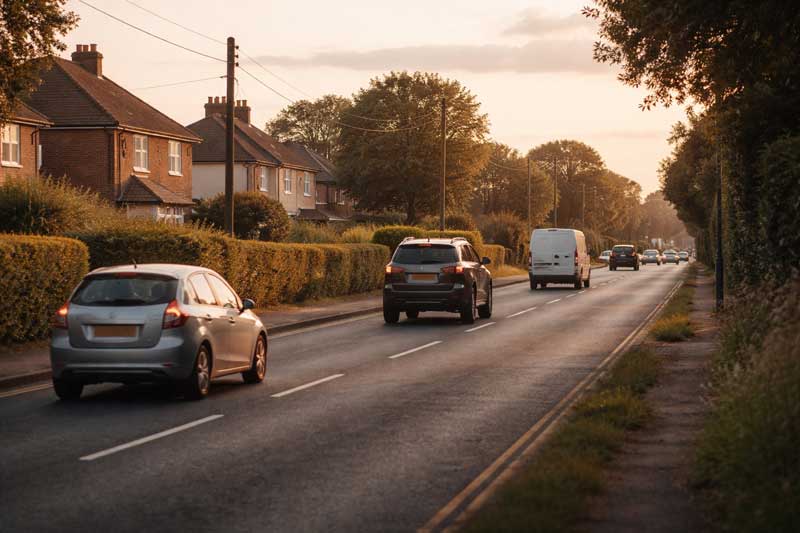
Vehicle choice can make a noticeable difference. See insurance by vehicle type.
How insurers bring it all together
small details can make a difference. A change in mileage, job title, or parking arrangements may affect how a policy is priced.
Keeping information accurate and up to date helps ensure that cover remains valid and that pricing reflects how the car is actually used.
- Young driver insurance
- Insurance by occupation
- Higher-risk drivers
- Lifestyle and circumstances
- Vehicle type and insurance
Explore more
- Young driver insurance
- Insurance by occupation
- Higher-risk drivers
- Lifestyle and circumstances
- Vehicle type and insurance
First-time owners and first-time buyers
Drivers buying or owning a car for the first time often have limited insurance history, so vehicle choice, mileage and named drivers can make a large difference. A low-powered car in a modest insurance group is usually easier to quote than a high-performance model.
Drivers with claims, accidents or higher-risk histories
A past accident or claim does not prevent comparison shopping. Insurers assess the number, type and age of incidents differently, so a driver who looks expensive to one insurer may be more acceptable to another.
EU drivers, leased cars and multiple vehicles
Drivers with overseas or EU experience may find insurers differ in the history they recognise. Leased cars are insured in broadly the same way as other cars but the lease may impose cover requirements. Owners of several cars should compare separate policies with multi-car arrangements rather than assuming one is always cheaper.
Understanding that mix makes it easier to see why prices vary, and where small changes may make a difference.